
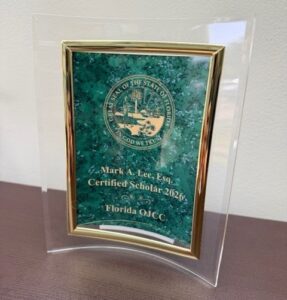
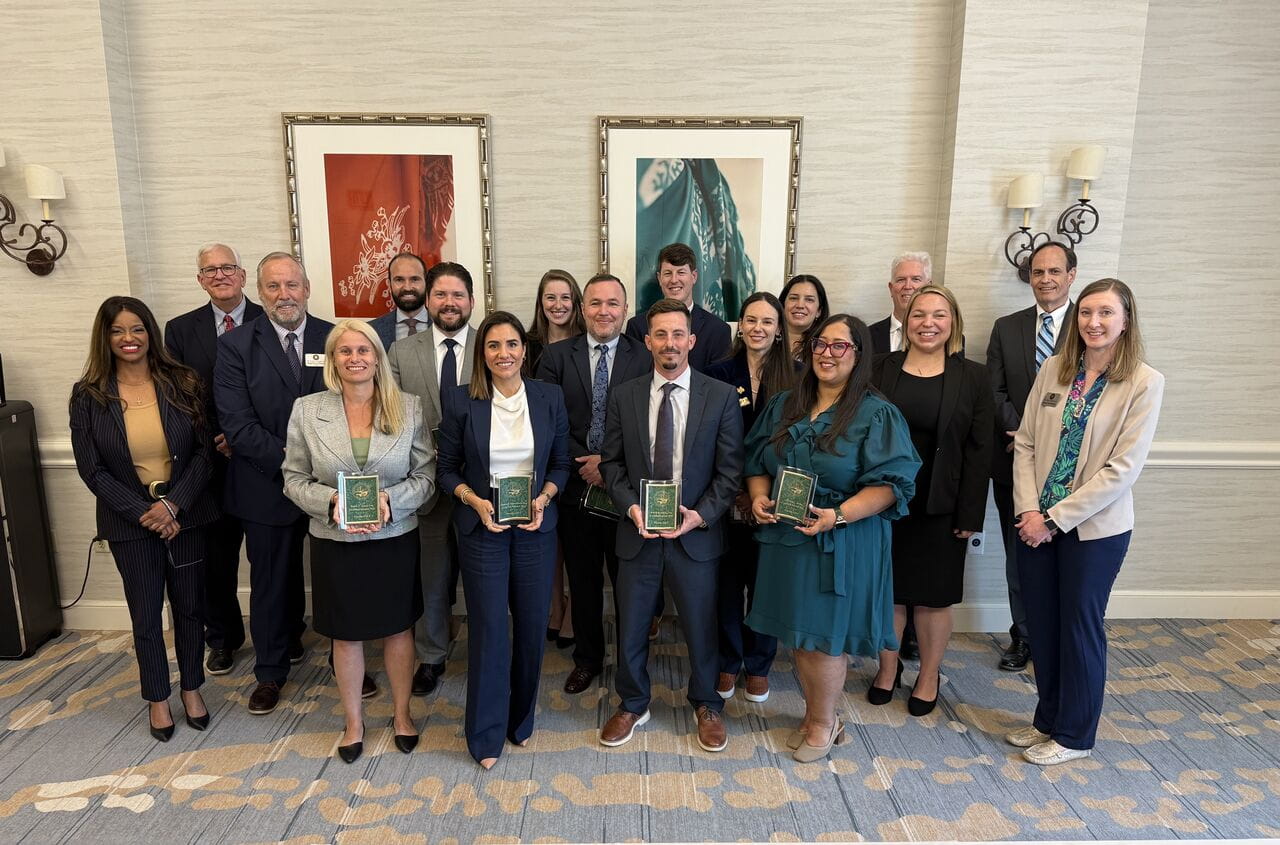
Mark Lee was honored to be selected for the 2026 OJCC Certified Scholar program, which concluded on April 22, 2026. The program is an extensive, deep dive for experienced Florida Workers’ Compensation professionals. Candidates are nominated by judges. The program lasted from August 2025 through completion in April 2026.
Developed by Scholars Committee members Judge Ralph Humphries, Judge Margaret Kerr, Judge Jonathan Walker, and mediator AnnaMarie Kim, the program offered “an intensive deep dive into the intricacies of workers’ compensation beyond the daily practice,” providing history, professionalism, judicial ethics, legislative and regulatory process, according to program collateral.
As a Florida workers’ compensation lawyer, ongoing education is essential to effectively advocating for injured workers within an ever‑evolving legal system. One of the most valuable professional experiences I have had was participating in the Office of the Judges of Compensation Claims (OJCC) Certified Scholar Program. The program offered far more than a review of statutes or procedures—it provided context, perspective, and insight into how Florida’s workers’ compensation system developed and how it functions today.
A foundational focus of the program was the history of workers’ compensation, both nationally and in Florida. Understanding where the system originated—from early European code‑based frameworks to English common‑law concepts—helps explain why modern workers’ compensation laws operate the way they do. The program traced the evolution of the “grand bargain,” highlighting how injured workers gave up the right to sue employers in exchange for defined benefits and how employers gained predictability in exposure. This historical framing is critical for any Florida workers’ compensation attorney seeking to understand the policy decisions and constitutional compromises that still influence the system today.
Another major area of study involved legislating and regulating the Florida workers’ compensation system. These sessions explored how workers’ compensation laws are created, amended, and implemented, including the role of Florida’s Administrative Procedure Act. The discussions emphasized separation‑of‑powers issues, agency rulemaking authority, and the checks that exist between the legislative, executive, and judicial branches. For attorneys practicing before the OJCC, understanding how statutes and administrative rules are shaped—and occasionally challenged—is essential to effective advocacy.
Closely tied to the legislative process was a thoughtful examination of ethics and professional responsibility. Ethics were not discussed in the abstract; instead, the program focused on real situations Florida workers’ compensation lawyers encounter daily. This included navigating professional relationships in a small legal community, balancing zealous representation with professionalism, and recognizing how conduct is perceived by judges, opposing counsel, and clients. These conversations reinforced that ethical issues often arise in subtle ways and require constant attention and self‑reflection.
The program also devoted significant time to judicial ethics and attorney discipline, reinforcing the shared responsibility attorneys and judges have in maintaining trust in Florida’s workers’ compensation system. Topics included enforcement of the Florida Rules of Professional Conduct, sanctions under Rule 60Q, judicial recusal, and the appearance of impartiality. These discussions underscored that professionalism and ethical conduct are not optional—they are fundamental to the integrity of the system and the fair treatment of Florida’s injured workers.
Another valuable component of the curriculum was comparative workers’ compensation law. By examining how Florida’s system differs from those in other states, the program highlighted policy‑driven decisions affecting benefit calculations, impairment ratings, medical treatment guidelines, pharmacy formularies, and procedural timelines. Seeing alternative approaches reinforced that many aspects of workers’ compensation are legislative choices rather than inevitabilities, and that reform discussions must always consider their impact on injured workers and employers alike.
Finally, the program addressed stress and wellness in legal practice, an often overlooked but critically important topic. Practicing as a Florida workers’ compensation lawyer can be demanding, with high caseloads, emotional client matters, and constant deadlines. The curriculum emphasized recognizing signs of stress, developing healthy coping strategies, and utilizing available resources when needed. A sustainable legal career requires not only legal knowledge, but also attention to personal well‑being.
Taken together, the OJCC Certified Scholar Program provided a comprehensive and practical framework for understanding Florida’s workers’ compensation system at a deeper level. It reinforced the importance of professionalism, ethics, and perspective—qualities that directly benefit the injured workers we serve every day.