<?xml version="1.0" encoding="UTF-8"?>
<?xml-stylesheet type="text/xsl" href="/wp-content/themes/feed/atom.xsl"?>
<feed
        xmlns="http://www.w3.org/2005/Atom"
        xmlns:wwe="http://release.wwe.com/atom/1.0"
        xmlns:thr="http://purl.org/syndication/thread/1.0"
        xmlns:taxo="http://purl.org/rss/1.0/modules/taxonomy/"
        xml:lang="en-US"
        xml:base="https://www.leeinjuryfirm.com/wp-atom.php"
	>
    <title type="text">Lee Injury Law Firm, PLLC</title>
    <subtitle type="text">Lee Injury Law Firm, PLLC</subtitle>

    <updated>2026-05-19T02:43:03Z</updated>

    <link rel="alternate" type="text/html" href="https://www.leeinjuryfirm.com" />
    <id>https://www.leeinjuryfirm.com/feed/atom/</id>
    <link rel="self" type="application/atom+xml" href="https://www.leeinjuryfirm.com/feed/atom/?forceByPassCache=0.09551520508037403" />
	
	<generator uri="https://wordpress.org/" version="6.9.4">WordPress</generator>
<icon>/wp-content/uploads/sites/1104285/2025/03/cropped-LeeInjury_Logo_site_icon-32x32.png</icon>
        <entry>
            <author>
									                    <name>by Lee Injury Law Firm, PLLC</name>
				            </author>
            <title type="html"><![CDATA[Florida Workers’ Comp: Reporting Your Injury]]></title>
            <link rel="alternate" type="text/html" href="https://www.leeinjuryfirm.com/blog/2026/05/florida-workers-comp-reporting-your-injury/" />
            <id>https://www.leeinjuryfirm.com/?p=47695</id>
            <updated>2026-05-19T02:43:03Z</updated>
            <published>2026-05-19T02:43:03Z</published>
					<taxo:topics><![CDATA[Notice, Workers&#8217; Compensation Coverage]]></taxo:topics>
            <summary type="html"><![CDATA[Two recent Florida workers’ compensation decisions show how quickly a claim can fail if an injured worker does not clearly report an “injury” within 30 days and maintain consistent records.]]></summary>
			                <content type="html" xml:base="https://www.leeinjuryfirm.com/blog/2026/05/florida-workers-comp-reporting-your-injury/"><![CDATA[There were two Florida workers compensation judicial decisions issued on May 8, 2026 involving the issue of injury reporting. Given that both injured workers failed in the pursuit of their claims, this is an issue that should be discussed, so an injured worker knows clearly what to do after sustaining an “<u>accident</u>” and “<u>injury</u>”.

If you’re hurt on the job in Florida, two issues often decide your case early: whether you reported an “injury” on time and whether the work accident is the major contributing cause of the medical care you need. A recent compensation order from a Pensacola Judge of Compensation Claims (JCC) is a useful roadmap for injured workers on what NOT to do.

<img class="size-medium wp-image-47696 alignleft" src="/wp-content/uploads/sites/1104285/2026/05/Reporting_your_injury_Florida_WC-300x200.png" alt="Reporting your Injury in Florida Workers Comp" width="300" height="200" />The first case released was <a href="https://www.jcc.state.fl.us/jccdocs20/2025/007005/25007005_229_05082026_09130007_i.pdf" data-wpel-link="external" rel="external noopener noreferrer">Nolan v. Santa Rosa County Board of County Commissioners</a>; This was released from the Pensacola district. OJCC Case #25-007005JW

The second case discussed after <em>Nolan</em> is <a href="https://www.jcc.state.fl.us/jccdocs20/2025/023839/25023839_229_05082026_17133032_i.pdf" data-wpel-link="external" rel="external noopener noreferrer">Catchings v. Wood Stork Delivery LLC</a>, OJCC # 25-023839JAW from the Ft Myers District.

<strong>What was the dispute about? (NOLAN)</strong>

The worker asked for medical treatment, a treating physician, and a ruling that his October 10, 2023 accident and resulting injuries were compensable. The employer/carrier denied compensability, asserted the worker did not timely report an “injury,” argued he declined treatment, and contended the accident was not the major contributing cause (MCC) of any need for treatment.

<strong>The legal rules the judge applied</strong>
<ul>
 	<li>Timely notice of injury Florida law requires an employee to advise the employer of the injury within 30 days of the accident or initial manifestation, subject to limited exceptions (actual knowledge, need for medical opinion to identify cause, lack of posted notice, or exceptional circumstances) . The JCC emphasized that the statute requires notice of an “injury,” not just that an accident happened.</li>
 	<li>Major Contributing Cause (MCC) The accidental compensable injury must be more than 50 percent responsible for the condition for which treatment or benefits are sought, established to a reasonable degree of medical certainty based on objective relevant medical findings .</li>
 	<li><strong>Credibility matters:</strong> The JCC weighed credibility heavily and accepted the testimony of multiple employer witnesses over the claimant’s testimony for reasons including consistency, experience with injury reporting, and lack of animus. I cannot underscore this point enough because credibility of an injured worker is a paramount concern: with his/her employer, with his/her physicians, with the tribunal or deposition, etc.</li>
</ul>
<strong>What facts persuaded the judge?</strong>
<ul>
 	<li><strong>No timely reporting of injury:</strong> The JCC found the worker never reported an injury to the County within 30 days; employer witnesses testified they asked about injuries at the scene, were told “I’m fine,” and received no later report; the risk manager confirmed the incident report did not mention an injury. Treatment records from the worker’s personal pain clinic did not document a 2023 work injury, and the claimant’s own expert acknowledged the absence of such a reference. In deposition, the worker admitted he did not tell anyone at work about pain and noticed pain after being let go.</li>
 	<li><strong>MCC not met:</strong> The employer’s expert, found cervical and lumbar MRIs showed no acute injury, only chronic degenerative changes, and opined the degenerative disease—not the 2023 event—was the MCC of any treatment need . Additional facts supporting that view included use of a seatbelt during the incident, a photo showing the tractor tipped to one side rather than multiple rollovers, a prior back injury from 2000 with treatment, a history of chiropractic care, and no link in post‑accident pain‑clinic records to the 2023 event .</li>
</ul>
<strong>The outcome</strong>

The JCC held the claims were barred for failure to give timely notice of an injury and, independently, that the 2023 accident was not the MCC of the requested medical treatment. All claims for medical authorization, compensability, and attorney’s fees/costs were denied and dismissed with prejudice, and all pending petitions were dismissed.

<strong>What was the dispute about? (CATCHINGS)</strong>

An Amazon delivery driver, Latanya Catchings, claimed she injured her lower back while loading her truck at the start of her shift on August 27, 2025. She sought temporary partial disability benefits, a primary care physician under workers’ comp, and penalties/interest. After a final hearing, the Judge of Compensation Claims denied all requested benefits with prejudice.

<strong>The legal rules the judge applied</strong>

Florida workers’ comp requires an accident “in the course and scope of employment” and timely notice to the employer within 30 days under section 440.185 . If the judge finds the worker’s account not credible and contemporaneous records don’t support a work accident, the claim can be denied.

<strong>What the judge looked at—and why it mattered</strong>

The judge weighed testimony, texts, sign-out sheets, and medical records.
<ul>
 	<li><strong>Credibility and reporting:</strong> The worker testified she told a co-worker (Jasmine Gomes) the day of the incident and reported it to dispatch (Aaron Jenkins) that evening; both witnesses testified she did not report any injury, and the sign‑out sheet’s injury box was left blank . The operations manager (David Pruitt) testified he asked if her ER records were work-related and she said “no,” and the owner (Virginia Phillips) first learned of a work-injury claim in October .</li>
 	<li><strong>Text messages right after the shift: </strong>Texts to dispatch on August 28 and September 2, 2025 did not mention a work injury; the first text expressly mentioning back spasms came September 2.</li>
 	<li>Medical records close in time ER records from September 3, 2025 documented lower back pain and flu-like symptoms “for the past 2 days,” with no report of a workplace accident.</li>
 	<li><strong>Prior back issues and imaging:</strong> A September 3, 2025 CT showed a right paracentral disc protrusion/extrusion at L5‑S1 that was present in December 2023 “but possibly more prominent,” contacting the right S1 nerve root .</li>
 	<li><strong>Expert opinions:</strong> Claimant’s IME doctor (Vigna) linked her condition to a lift on August 27 based on her history of same‑day pain and next‑day leg symptoms, recommending injections and, if needed, surgery; the judge rejected this causation opinion because the contemporaneous texts and ER history indicated pain began days later. The employer/carrier’s IME (Fuchs) agreed her condition worsened over time and that surgery could be appropriate if injections failed, but he could not say the herniation was caused by the alleged work lift, noting such herniations can occur with benign movements.</li>
 	<li><strong>Timely notice:</strong> The judge found she did not provide notice of a work accident within 30 days as required; a September 15 text asking for “HR phone number or worker comp” did not suffice on these facts.</li>
</ul>
<strong>The outcome</strong>

The judge found no compensable work accident occurred on August 27, 2025, denied all benefits (temporary partial disability, primary care authorization, penalties/interest), and dismissed with prejudice

<strong>Practical takeaways for injured workers</strong>
<ul>
 	<li>Report an “injury,” not just an “accident.” If you feel any pain or symptoms, tell a supervisor right away and say you are injured. Ask that an injury report be created and request medical treatment.</li>
 	<li>Do it fast—within 30 days. Missing the 30‑day window can bar your claim unless a narrow exception applies. When in doubt, report and document.</li>
 	<li>Be consistent in your medical records. Make sure your doctors know your injury happened at work and on what date. Ask that the work relationship be documented.</li>
 	<li>Understand MCC. Pre‑existing conditions are common. You can still pursue benefits if the work incident is more than 50 percent responsible for the need for care—but objective medical findings are critical.</li>
 	<li>Preserve evidence. Keep photos, names of witnesses, and copies of any incident or drug‑testing forms from the date of the event. Save text messages or emails, and anything that document the reporting.</li>
 	<li>Get legal guidance early. An attorney can help you meet deadlines, frame notice correctly, and coordinate accurate medical documentation.</li>
</ul>
<div class="et_pb_column et_pb_column_2_3 et_pb_column_2_tb_body  et_pb_css_mix_blend_mode_passthrough">
<div class="et_pb_module et_pb_post_content et_pb_post_content_0_tb_body fl-darklinks">

Call us today at 813-321-0426 or request your free consult at our <a href="https://www3.apptoto.com/b/leeinjuryfirm/#availability__%7B%22appointmentTypeToken%22:%2230_minutes%22%7D" rel="external noopener noreferrer" data-wpel-link="external"><strong>scheduling link</strong></a>. If you’re hurt and uncertain about your options, don’t go it alone—get answers now.

</div>
</div>]]></content>
						        </entry>
	        <entry>
            <author>
									                    <name>by Lee Injury Law Firm, PLLC</name>
				            </author>
            <title type="html"><![CDATA[Can You Refuse Light-Duty Work Because of a Tough Commute? A Florida Case Offers Guidance]]></title>
            <link rel="alternate" type="text/html" href="https://www.leeinjuryfirm.com/blog/2026/04/can-you-refuse-light-duty-work-because-of-a-tough-commute-a-florida-case-offers-guidance/" />
            <id>https://www.leeinjuryfirm.com/?p=47680</id>
            <updated>2026-04-30T12:50:18Z</updated>
            <published>2026-04-30T12:50:18Z</published>
					<taxo:topics><![CDATA[Indemnity]]></taxo:topics>
            <summary type="html"><![CDATA[Facing a light-duty job offer after a workplace injury? A Florida workers’ compensation lawyer can help you protect your TPD benefits by showing when a refusal is “justifiable” under Florida Statute 440.15(6)—including commute and transportation problems—and by building the medical and practical evidence to support the refusal. ]]></summary>
			                <content type="html" xml:base="https://www.leeinjuryfirm.com/blog/2026/04/can-you-refuse-light-duty-work-because-of-a-tough-commute-a-florida-case-offers-guidance/"><![CDATA[When you’re hurt on the job, your employer may offer “light-duty” work that fits your medical restrictions. But what if getting to that job is difficult—long distance, you have limited transportation, or increased pain when performing the work activity? A Florida appellate decision highlights how judges evaluate whether refusing such work is “justifiable,” and what that means for your benefits.

<img class="size-medium wp-image-47693 alignright" src="/wp-content/uploads/sites/1104285/2026/04/light_duty_tampa_workers_comp_lawyer-300x200.jpg" alt="Light Duty Job Offer - Florida Workers' Compensation" width="300" height="200" />The issue of a “light duty” offer is very complex and entirely fact-specific. Under F.S. 440.15(6), the Judge is the decision-maker whether the refusal is justified. This can depend on a multitude of factors: the restrictions, the job offered, the good-faith work attempts of the injured worker, just to name a few.

In <a href="https://caselaw.findlaw.com/court/fl-district-court-of-appeal/1952168.html" data-wpel-link="external" rel="external noopener noreferrer">Employbridge v. Rodriguez, 255 So.3d 453 (Fla. App. 2018),</a> the employer offered the injured worker a clerical light-duty job in its Tampa office after a knee injury limited her duties at a client site in Largo, but she declined and sought temporary partial disability (TPD) benefits . The Judge of Compensation Claims (JCC) initially awarded TPD, finding the refusal “justifiable” due to commute-related hurdles, but the First District Court of Appeal reversed, holding the record did not support justifiable refusal .
<h3>What Florida Law Says</h3>
Under section 440.15(6), Florida Statutes, an injured worker who refuses “suitable” employment offered by the employer is not entitled to compensation during the refusal, unless the JCC finds the refusal justifiable . There was no dispute that the employer’s Tampa job matched the claimant’s medical restrictions .
<h3>Factors the Appellate Judges Considered</h3>
<ul>
 	<li><strong>Suitability of the job</strong>: The light-duty clerical position in Tampa was suitable to the claimant’s restrictions .</li>
</ul>
<ul>
 	<li><strong>Reasons for refusal (transportation and commuting issues)</strong>: The JCC credited language limitations, limited driving experience, one family vehicle used by the spouse on varying shifts, unfamiliarity with highways and public transportation, reliance on others for rides, and reports of pain when sitting long periods . The appellate court characterized these as ordinary, manageable, or self-imposed commuting limitations that did not justify refusing suitable work, especially where public transit options had not been investigated .</li>
 	<li><strong>Medical nexus to the refusal: </strong>Although the order referenced leg pain with prolonged sitting, the appellate court found no competent substantial evidence that pain prevented commuting; the claimant repeatedly attributed refusal to transportation, not a medical bar, and said she could work if she had a ride .</li>
 	<li><strong>Competing views on “justifiable”: </strong>One concurring judge would require a “plausible nexus” between the refusal and the workplace injury or health/safety concerns, emphasizing the statute’s goal of promoting return to work. Another judge dissented, arguing the statute grants broad discretion to JCCs to consider non-injury factors and that the JCC’s findings were supported by the record .</li>
</ul>
<h3>Practical Takeaways for Injured Workers</h3>
<ul>
 	<li><strong>Investigate alternatives before refusing.</strong>
Failure to explore conventional options like public transportation can undermine a claim that refusal is justified .</li>
 	<li><strong>Document medical barriers clearly.</strong>
If pain or restrictions make commuting unsafe or unworkable, ensure medical evidence connects your limitations to the commute or job requirements .</li>
 	<li><strong>Understand that “ordinary” commute problems may not suffice</strong>.
Courts may view typical transportation hurdles—single-car households, ridesharing needs, language-related logistics, and unfamiliar highways—as manageable rather than legally justifying refusal of suitable work. Other factors such as distance or a nexus to the work injury may also be relevant here.</li>
 	<li><strong>Keep communication consistent.</strong>
Stating you could work if transportation were available, without tying refusal to documented medical limitations, can weaken a claim the refusal is justified.</li>
</ul>
<h3>How This Applies in Real Life</h3>
<ul>
 	<li>Example 1: If your employer offers a desk job within your restrictions 15–20 miles away, and you decline due to lack of a car, you may risk losing temporary benefits unless you can show you explored practical transit options and have credible medical reasons tied to the commute demands. In Rodriguez, ordinary commuting limitations did not justify refusal .</li>
 	<li>Example 2: If prolonged sitting during a required commute worsens a compensable injury, obtain medical documentation that links the commute demands to your restrictions and propose reasonable alternatives (closer placement, modified hours, remote tasks where feasible). The appellate court faulted the lack of competent substantial evidence tying leg pain to an inability to commute .</li>
 	<li>Example 3: If the employer’s alternative work is objectively unsuitable (outside restrictions) or presents credible health/safety risks, gather medical opinions and evidence early to support a justifiable refusal. The statute permits benefits if the JCC finds the refusal justifiable, but suitability and evidence drive the outcome .</li>
</ul>
<h3>Bottom Line</h3>
Refusing a suitable light-duty job can jeopardize your wage-loss benefits unless you have a well-documented, credible justification—ideally supported by medical evidence and proof you explored reasonable commuting alternatives. Florida law is designed to encourage return to gainful work, and appellate courts may reject justifications based on ordinary commuting issues unconnected to medical limitations .

Additionally, it can be very important you complete <a href="https://www.leeinjuryfirm.com/blog/2025/11/florida-workers-compensation-dwc-19-form-employee-earnings-report/" data-wpel-link="internal">DWC-19 forms</a> in support of your TPD claim. Also, if your claim is <a href="https://www.leeinjuryfirm.com/blog/2023/03/if-your-work-comp-claim-is-denied/" data-wpel-link="internal">denied</a>, that can be another wrinkle.
<h3>We Can Help</h3>
Struggling with a light-duty offer, transportation barriers, or pressure to return too soon or with an impractical offer? Our workers’ compensation attorney helps injured workers navigate return-to-work offers, document medical limits, and protect benefits.
<ul>
 	<li>Free, no-obligation consultation</li>
 	<li>Prompt evaluation of your light-duty offer and restrictions</li>
 	<li>Strategy to preserve benefits while complying with the law</li>
</ul>
Call us today at 813-321-0426 or request your free consult at our <a href="https://www3.apptoto.com/b/leeinjuryfirm/#availability__{%22appointmentTypeToken%22:%2230_minutes%22}" data-wpel-link="external" rel="external noopener noreferrer"><strong>scheduling link</strong></a>. If you’re hurt and uncertain about your options, don’t go it alone—get answers now.]]></content>
						        </entry>
	        <entry>
            <author>
									                    <name>by Lee Injury Law Firm, PLLC</name>
				            </author>
            <title type="html"><![CDATA[Completion of the OJCC Certified Scholar Program 2026]]></title>
            <link rel="alternate" type="text/html" href="https://www.leeinjuryfirm.com/blog/2026/04/completion-of-the-ojcc-certified-scholar-program-2026/" />
            <id>https://www.leeinjuryfirm.com/?p=47683</id>
            <updated>2026-04-29T16:43:14Z</updated>
            <published>2026-04-29T15:57:50Z</published>
					<taxo:topics><![CDATA[-]]></taxo:topics>
            <summary type="html"><![CDATA[Mark Lee was honored to be selected for the 2026 OJCC Certified Scholar program, which concluded on April 22, 2026. The program is an extensive, deep dive for experienced Florida Workers' Compensation professionals. Candidates are nominated by judges.]]></summary>
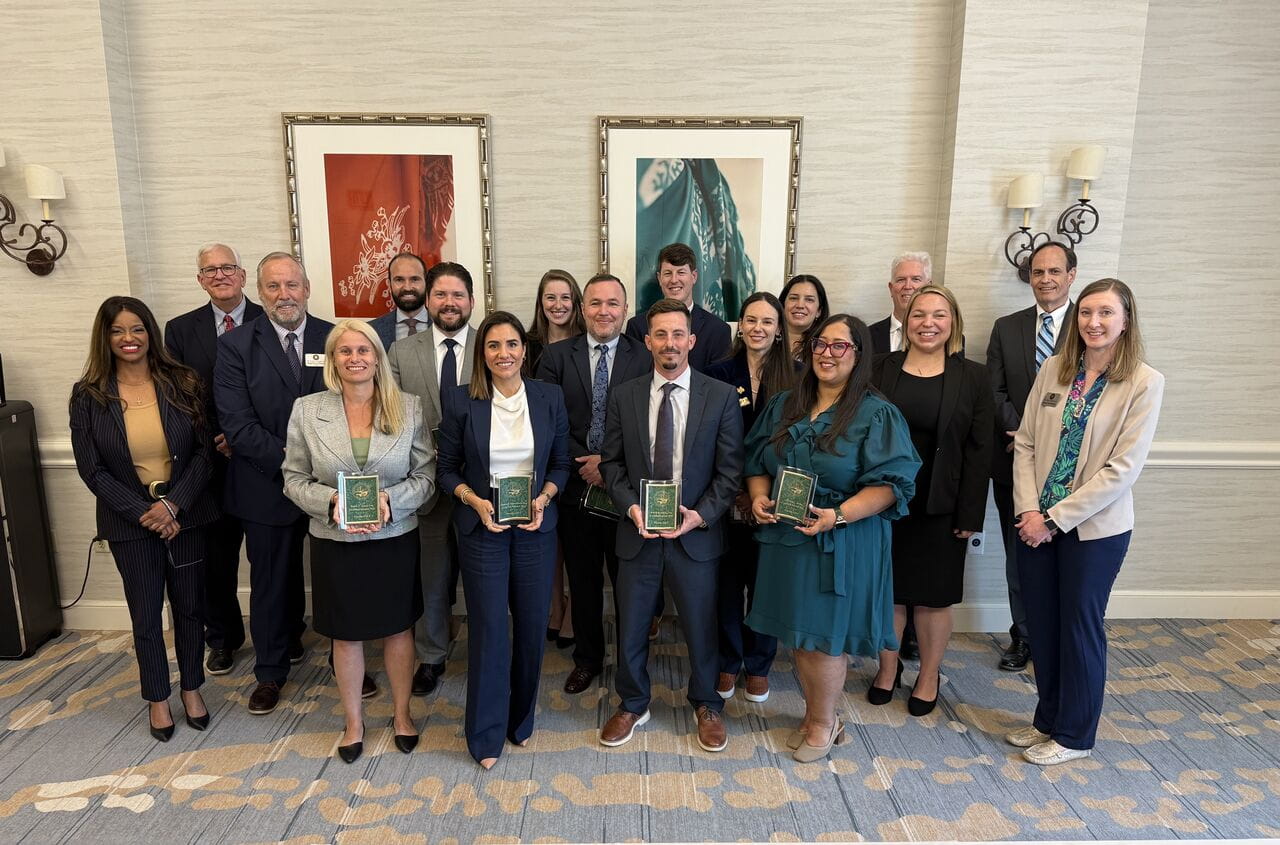
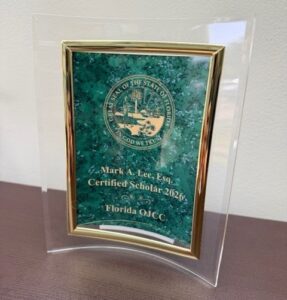
			                <content type="html" xml:base="https://www.leeinjuryfirm.com/blog/2026/04/completion-of-the-ojcc-certified-scholar-program-2026/"><![CDATA[<span style="font-family: 'times new roman', times, serif;"><img class="wp-image-47691 alignright" src="/wp-content/uploads/sites/1104285/2026/04/OJCCCertifiedScholar-287x300.jpg" alt="Mark Lee; OJCC Certified Scholar" width="400" height="418" /><span style="font-family: tahoma, arial, helvetica, sans-serif;">Mark Lee was honored to be selected for the 2026 OJCC Certified Scholar program, which concluded on April 22, 2026. The program is an extensive, deep dive for experienced Florida Workers' Compensation professionals. Candidates are nominated by judges. The program lasted from August 2025 through completion in April 2026.  </span></span>

<span style="font-family: tahoma, arial, helvetica, sans-serif;">Developed by Scholars Committee members Judge Ralph Humphries, Judge Margaret Kerr, Judge Jonathan Walker, and mediator AnnaMarie Kim, the program offered “an intensive deep dive into the intricacies of workers’ compensation beyond the daily practice,” providing history, professionalism, judicial ethics, legislative and regulatory process, according to program collateral.</span>
<div>

<hr />

<span style="font-family: tahoma, arial, helvetica, sans-serif;">As a <strong>Florida workers’ compensation lawyer</strong>, ongoing education is essential to effectively advocating for injured workers within an ever‑evolving legal system. One of the most valuable professional experiences I have had was participating in the <strong>Office of the Judges of Compensation Claims (OJCC) Certified Scholar Program</strong>. The program offered far more than a review of statutes or procedures—it provided context, perspective, and insight into how Florida’s workers’ compensation system developed and how it functions today.</span>

<span style="font-family: tahoma, arial, helvetica, sans-serif;">A foundational focus of the program was the <strong>history of workers’ compensation</strong>, both nationally and in Florida. Understanding where the system originated—from early European code‑based frameworks to English common‑law concepts—helps explain why modern workers’ compensation laws operate the way they do. The program traced the evolution of the “grand bargain,” highlighting how injured workers gave up the right to sue employers in exchange for defined benefits and how employers gained predictability in exposure. This historical framing is critical for any Florida workers’ compensation attorney seeking to understand the policy decisions and constitutional compromises that still influence the system today.</span>

<span style="font-family: tahoma, arial, helvetica, sans-serif;">Another major area of study involved <strong>legislating and regulating the Florida workers’ compensation system</strong>. These sessions explored how workers’ compensation laws are created, amended, and implemented, including the role of Florida’s Administrative Procedure Act. The discussions emphasized separation‑of‑powers issues, agency rulemaking authority, and the checks that exist between the legislative, executive, and judicial branches. For attorneys practicing before the OJCC, understanding how statutes and administrative rules are shaped—and occasionally challenged—is essential to effective advocacy.</span>

<span style="font-family: tahoma, arial, helvetica, sans-serif;">Closely tied to the legislative process was a thoughtful examination of <strong>ethics and professional responsibility</strong>. Ethics were not discussed in the abstract; instead, the program focused on real situations Florida workers’ compensation lawyers encounter daily. This included navigating professional relationships in a small legal community, balancing zealous representation with professionalism, and recognizing how conduct is perceived by judges, opposing counsel, and clients. These conversations reinforced that ethical issues often arise in subtle ways and require constant attention and self‑reflection.</span>

[caption id="attachment_47685" align="alignright" width="641"]<img class="wp-image-47685" src="/wp-content/uploads/sites/1104285/2026/04/Tampa-work-comp-lawyer-OJCC-grad.jpg" alt="OJCC Certified Scholar Program 2026" width="641" height="423" /> <span style="font-family: tahoma, arial, helvetica, sans-serif;">OJCC Certified Scholar Program 2026; April 22, 2026</span>[/caption]

<span style="font-family: tahoma, arial, helvetica, sans-serif;">The program also devoted significant time to <strong>judicial ethics and attorney discipline</strong>, reinforcing the shared responsibility attorneys and judges have in maintaining trust in Florida’s workers’ compensation system. Topics included enforcement of the Florida Rules of Professional Conduct, sanctions under Rule 60Q, judicial recusal, and the appearance of impartiality. These discussions underscored that professionalism and ethical conduct are not optional—they are fundamental to the integrity of the system and the fair treatment of Florida’s injured workers.</span>

<span style="font-family: tahoma, arial, helvetica, sans-serif;">Another valuable component of the curriculum was <strong>comparative workers’ compensation law</strong>. By examining how Florida’s system differs from those in other states, the program highlighted policy‑driven decisions affecting benefit calculations, impairment ratings, medical treatment guidelines, pharmacy formularies, and procedural timelines. Seeing alternative approaches reinforced that many aspects of workers’ compensation are legislative choices rather than inevitabilities, and that reform discussions must always consider their impact on injured workers and employers alike.</span>

<span style="font-family: tahoma, arial, helvetica, sans-serif;">Finally, the program addressed <strong>stress and wellness in legal practice</strong>, an often overlooked but critically important topic. Practicing as a Florida workers’ compensation lawyer can be demanding, with high caseloads, emotional client matters, and constant deadlines. The curriculum emphasized recognizing signs of stress, developing healthy coping strategies, and utilizing available resources when needed. A sustainable legal career requires not only legal knowledge, but also attention to personal well‑being.</span>

<span style="font-family: tahoma, arial, helvetica, sans-serif;">Taken together, the OJCC Certified Scholar Program provided a comprehensive and practical framework for understanding Florida’s workers’ compensation system at a deeper level. It reinforced the importance of professionalism, ethics, and perspective—qualities that directly benefit the injured workers we serve every day.</span>

</div>]]></content>
						        </entry>
	        <entry>
            <author>
									                    <name>by Lee Injury Law Firm, PLLC</name>
				            </author>
            <title type="html"><![CDATA[FCCI denial &#8211; Who Pays When Subcontractors Lack Workers’ Comp?]]></title>
            <link rel="alternate" type="text/html" href="https://www.leeinjuryfirm.com/blog/2025/11/fcci-denial-who-pays-when-subcontractors-lack-workers-comp/" />
            <id>https://www.leeinjuryfirm.com/?p=47674</id>
            <updated>2025-11-10T04:01:34Z</updated>
            <published>2025-11-10T04:01:02Z</published>
					<taxo:topics><![CDATA[Workers&#8217; Compensation Coverage]]></taxo:topics>
            <summary type="html"><![CDATA[Florida Workers' Compensation - FCCI denial. This dispute centered around whether there was no coverage, FCCI insurance covered the claim, or Accident Fund had coverage. The FCCI denial was overturned and FCCI was found liable to provide coverage. ]]></summary>
			                <content type="html" xml:base="https://www.leeinjuryfirm.com/blog/2025/11/fcci-denial-who-pays-when-subcontractors-lack-workers-comp/"><![CDATA[<img class="alignright wp-image-47675 size-medium" src="/wp-content/uploads/sites/1104285/2025/11/FCCI_Denial_coverage_florida_workers_compensation_claims-300x200.png" alt="FCCI Denial" width="300" height="200" />
<h2>Recap of a recent FCCI denial. Who Pays When Subcontractors Lack Workers’ Comp? A Recent Florida Decision Helps Injured Roofers</h2>
When disaster work ramps up after a hurricane, multiple layers of contractors and subcontractors often race to get roofs covered—and that’s exactly when coverage disputes can arise. A recent Final Compensation Order from the Ft. Myers Office of the Judges of Compensation Claims sheds light on a key question: who is legally responsible to provide workers’ compensation benefits when the injured worker’s immediate employer lacks proper coverage? This dispute centered around whether there was no coverage, FCCI insurance covered the claim, or Accident Fund had coverage. The FCCI denial was overturned and FCCI was found liable to provide coverage.
<h3>The Case in Brief</h3>
<ul>
 	<li>The claimant, a 35-year-old roofer, traveled to Florida for post–Hurricane Ian tarp work and was injured his first day on the job after falling from a one‑story roof, hurting his spine and both knees. He was working for Lenin’s Construction LLC, a subcontractor on a FEMA Blue Tarp project. He had worked for several successive years on the post-Hurricane projects across the Southeast. Outside of Hurricane season, he worked construction.</li>
 	<li>The contracting chain ran: Hughes Construction Services, LLC (general contractor on the FEMA project) → C&amp;G Emergency Response (subcontractor) → Lenin’s Construction LLC (sub‑subcontractor and claimant’s employer).</li>
 	<li>C&amp;G had no Florida workers’ comp coverage on the accident date; Hughes did. The dispute centered on whether Accident Fund’s policy covered Lenin’s Construction LLC.</li>
</ul>
<h3>The Legal Issue</h3>
The judge bifurcated the case to decide: who is the responsible employer or statutory employer, and which carrier has coverage? The core fight was whether Accident Fund insured Lenin’s Construction LLC for Florida work on the accident date or whether FCCI was the correct carrier for the claimant – insuring the general contractor.
<h3>Key Evidence on Coverage</h3>
<ul>
 	<li>Accident Fund issued a workers’ comp policy to “Lenin Zelaya Medina, sole proprietor,” for DC and Virginia—not to Lenin’s Construction LLC. No endorsement added the LLC or a d/b/a.</li>
 	<li>A “Certificate of Liability Insurance” referencing “c/o Lenin’s Construction LLC” was rejected as not genuine: it listed policy limits that didn’t match and used date formats Accident Fund doesn’t use. The judge gave it no evidentiary weight.</li>
 	<li>Result: Lenin’s Construction LLC was not a named insured; Accident Fund had no duty to cover this Florida accident under that policy.</li>
</ul>
<h3>The “Other States” Provision—And Why It Didn’t Save Coverage</h3>
Even assuming Lenin’s Construction LLC had been insured, Accident Fund’s Residual Market Limited Other States Insurance Endorsement required all three conditions to be met: a) Hiring or principal employment in a listed 3.A. state (here, DC or Virginia); b) No obligation under the other state’s law to carry separate coverage (and no other coverage in place); c) Temporary work in the other state.
<ul>
 	<li>The judge found the Florida work was temporary (about five weeks).</li>
 	<li>But two prongs failed:
<ul>
 	<li>Florida law required separate workers’ comp for construction companies with one or more employees, so condition (b) wasn’t met.</li>
 	<li>The claimant was not principally employed in DC or Virginia when hired for this job, and the contract wasn’t made in DC or Virginia, so condition (a) wasn’t met.</li>
</ul>
</li>
</ul>
Bottom line: the Other States endorsement didn’t apply; Accident Fund still had no coverage here.
<h3>The Outcome: Statutory Employer Liability</h3>
Because Lenin’s Construction LLC (the direct employer) had no applicable Florida coverage and C&amp;G also lacked Florida coverage, Florida’s statutory employer doctrine placed responsibility on the upstream contractor with valid Florida coverage—Hughes Construction and its carrier, FCCI. FCCI is responsible for providing the claimant’s workers’ compensation benefits.
<h3>What This Means for Injured Workers</h3>
<ul>
 	<li>You don’t have to figure out who writes your checks to get benefits. If your direct employer or subcontractor doesn’t have valid Florida coverage, the law can shift responsibility up the chain to the statutory employer and its insurer.</li>
 	<li>Don’t rely on certificates that look “” Courts look to the actual policy, named insureds, endorsements, and where the contract was made and work performed.</li>
</ul>
<h3>Injured Doing Disaster or Construction Work in Florida? We Can Help.</h3>
If you were hurt on a construction or storm‑response job and are being told “there’s no coverage,” don’t assume that’s the end of the story. We know how to trace the contracting chain, test the policy language, and enforce statutory employer liability so you get medical care and lost‑wage benefits.

Call us today for a free consultation. No fee unless we win benefits for you.

Case Reference: Final Compensation Order, OJCC Case No. 24-024353JAW (Accident date 10/10/2022; Order dated 9/9/2025), Judge Jack A. Weiss, Ft. Myers District Office.]]></content>
						        </entry>
	        <entry>
            <author>
									                    <name> marklee</name>
				            </author>
            <title type="html"><![CDATA[Florida Workers&#8217; Compensation &#8211; DWC 19 form &#8211; Employee Earnings Report]]></title>
            <link rel="alternate" type="text/html" href="https://www.leeinjuryfirm.com/blog/2025/11/florida-workers-compensation-dwc-19-form-employee-earnings-report/" />
            <id>https://www.leeinjuryfirm.com/?p=47670</id>
            <updated>2025-11-10T04:02:33Z</updated>
            <published>2025-11-10T03:06:15Z</published>
					<taxo:topics><![CDATA[Indemnity]]></taxo:topics>
            <summary type="html"><![CDATA[If you’re dealing with a Florida workers’ compensation claim, you might be asked to fill out a DWC-19 form. Here’s what you need to know:]]></summary>
			                <content type="html" xml:base="https://www.leeinjuryfirm.com/blog/2025/11/florida-workers-compensation-dwc-19-form-employee-earnings-report/"><![CDATA[<strong>Understanding the DWC-19 Form in Florida Workers’ Compensation</strong>

If you’re dealing with a Florida workers’ compensation claim, you might be asked to fill out a DWC-19 form. Here’s what you need to know:

<img class="alignright wp-image-47671 size-medium" src="/wp-content/uploads/sites/1104285/2025/11/Florida_Workers_Comp_DWC19_form-300x300.jpg" alt="Florida DWC 19 Form" width="300" height="300" />

<strong>When Do You Have to Complete the DWC-19?</strong>
<ul>
 	<li><strong>Only if you’re seeking or receiving indemnity benefits</strong> (like lost wage payments) does the insurance company (Carrier) have the right to ask you to complete the DWC-19.</li>
 	<li>The Carrier must first send you the form and an informational letter explaining your obligations. If you don’t return the signed form within 21 days, your benefits can be suspended.</li>
</ul>
<strong>What’s the Purpose?</strong>
<ul>
 	<li>The DWC-19 helps the Carrier find out if you have any income, earnings, unemployment, or other payments that could affect your benefits.</li>
 	<li>If you’re not getting or claiming indemnity benefits, you don’t have to complete the form—even if it’s sent to you. Sometimes, defense attorneys send it out as a routine part of discovery, but you can ignore it if you’re not seeking benefits.</li>
</ul>
<strong>What Happens If You Don’t Return It?</strong>
<ul>
 	<li>If you don’t return the DWC-19 within 21 days and you’re supposed to, your benefits can be suspended. Penalties and interest only start running again once you return the form (this is the general consensus). While Temporary Partial Disability is payable biweekly, the DWC-19 only needs to be returned within 21 days. Additionally, the claims handling entity may require the employee to send Form [DWC-19] <em>Not more than once a month</em>.  F.A.C. 69L-3.021(4).</li>
</ul>
<strong>What Should You Report?</strong>
<ul>
 	<li>You’re required to report “all earnings of any nature.” If you have any doubt about what counts as income, it’s best to over-report rather than risk a fraud allegation.</li>
 	<li>If you’re self-employed, report your net profit (not gross revenue). You should be able to back up any numbers with appropriate records, although attaching cumbersome documentation should not be required.</li>
 	<li>Attach documentation like paycheck stubs if possible, and note “see attached” on the form.</li>
</ul>
<strong>Key Takeaways</strong>
<ul>
 	<li><strong>Don’t ignore the DWC-19 if you’re getting benefits.</strong></li>
 	<li><strong>If you’re not receiving or claiming benefits, you don’t have to complete it.</strong></li>
 	<li><strong>Make sure the form is properly filled out by the Carrier before you sign.</strong></li>
 	<li><strong>Report all income, and attach supporting documents when you can.</strong></li>
</ul>
If you have questions or concerns about the DWC-19, talk to your attorney—they can help make sure you’re protected and your benefits aren’t unfairly suspended.

If you have questions regarding the DWC-19 forms in Florida, or questions about the interplay between completion of this form and benefits, reach out to our office for a Free consultation.]]></content>
						        </entry>
	        <entry>
            <author>
									                    <name>by Lee Injury Law Firm, PLLC</name>
				            </author>
            <title type="html"><![CDATA[Social Security Announces 2.8% COLA for 2026]]></title>
            <link rel="alternate" type="text/html" href="https://www.leeinjuryfirm.com/blog/2025/11/social-security-announces-2-8-cola-for-2026/" />
            <id>https://www.leeinjuryfirm.com/?p=47668</id>
            <updated>2025-11-02T18:19:14Z</updated>
            <published>2025-11-02T18:19:14Z</published>
					<taxo:topics><![CDATA[-]]></taxo:topics>
            <summary type="html"><![CDATA[The Social Security Administration announced a 2.8% benefit increase for 2026. See the announcement here. This will increase the average monthly Social Security benefit for disability beneficiaries from $1,586 to $1,630. The COLA will take effect beginning in January 2026. To review the COLA factsheet, you can visit the SSA page here. The Substantial Gainful Activity (SGA) threshold will increase from…]]></summary>
			                <content type="html" xml:base="https://www.leeinjuryfirm.com/blog/2025/11/social-security-announces-2-8-cola-for-2026/"><![CDATA[The Social Security Administration announced a 2.8% benefit increase for 2026. See the announcement <a href="https://blog.ssa.gov/social-security-announces-benefit-increase-for-2026/?utm_medium=email&amp;utm_source=govdelivery" data-wpel-link="external" rel="external noopener noreferrer">here</a>.

This will increase the average monthly Social Security benefit for disability beneficiaries from $1,586 to $1,630. The COLA will take effect beginning in January 2026.

To review the COLA factsheet, you can visit the SSA page<a href="https://www.ssa.gov/cola/factsheets/2026.html" data-wpel-link="external" rel="external noopener noreferrer"> here</a>.

The Substantial Gainful Activity (SGA) threshold will increase from $1,620/month to $1,690/month for non-blind individuals, and the Trial Work Period (TWP) threshold will increase from $1,160/month to $1,210/month.

The SSI Federal Payment Standard will increase to $994/month for an individual and $1,491/month for a couple. The SSI Resource limits are fixed by statute and will remain unchanged.

________

The COLA happens every year. If you have been denied Social Security Disability benefits, please feel free to contact our office for a free consultation.]]></content>
						        </entry>
	        <entry>
            <author>
									                    <name>On Behalf of Lee Injury Law Firm, PLLC</name>
				            </author>
            <title type="html"><![CDATA[Impairment Income Benefits]]></title>
            <link rel="alternate" type="text/html" href="https://www.leeinjuryfirm.com/blog/2025/03/impairment-income-benefits/" />
            <id>https://www.leeinjuryfirm.com/?p=47299</id>
            <updated>2025-03-13T22:06:34Z</updated>
            <published>2025-03-13T21:23:29Z</published>
					<taxo:topics><![CDATA[-]]></taxo:topics>
            <summary type="html"><![CDATA[Impairment Income Benefits – Florida Workers’ Compensation When an injured worker is placed maximum medical improvement, the treating physician assigns an impairment rating. The impairment rating is based on the amount of permanent dysfunction according to the 1996 Florida Impairment Rating Guide. An injured worker must be at overall maximum medical improvement for all conditions for the impairment benefits to become…]]></summary>
			                <content type="html" xml:base="https://www.leeinjuryfirm.com/blog/2025/03/impairment-income-benefits/"><![CDATA[Impairment Income Benefits – Florida Workers’ Compensation

When an injured worker is placed maximum medical improvement, the treating physician assigns an impairment rating. The impairment rating is based on the amount of permanent dysfunction according to the <a href="https://cdn2.hubspot.net/hub/171716/file-18449401-pdf/docs/1996_fl_impairment_rating_schedule.pdf" target="_blank" rel="noopener external noreferrer" data-wpel-link="external">1996 Florida Impairment Rating Guide</a>.

An injured worker must be at overall maximum medical improvement for all conditions for the impairment benefits to become payable.

For psychiatric injuries, the impairment rating is limited to one percent. <a href="http://www.leg.state.fl.us/Statutes/index.cfm?App_mode=Display_Statute&amp;Search_String=&amp;URL=0400-0499/0440/Sections/0440.15.html" target="_blank" rel="noopener external noreferrer" data-wpel-link="external">Florida Statute 440.15 (3)(c</a>) states “If objective medical findings can substantiate a permanent psychiatric impairment resulting from the accident, permanent impairment benefits are limited for the permanent psychiatric impairment to 1-percent permanent impairment.”

Impairment income benefits are paid according to a formular set forth in Florida Statute 440.15(3)(g):

1. Two weeks of benefits are to be paid for each percentage point of impairment from 1-10 percent.

2. For each percentage point of impairment from 11- 15 percent, 3 weeks of benefits are to be paid.

3. For each percentage point of impairment from 16-20 percent, 4 weeks of benefits are to be paid.

4. For each percentage point of impairment from 21 percent and higher, 6 weeks of benefits are to be paid.
<table>
<tbody>
<tr>
<td width="312">Impairment Rating</td>
<td width="312">Number of weeks payable</td>
</tr>
<tr>
<td width="312">1-10</td>
<td width="312">2 weeks per percentage point</td>
</tr>
<tr>
<td width="312">11-15</td>
<td width="312">3 weeks per percentage point</td>
</tr>
<tr>
<td width="312">16-20</td>
<td width="312">4 weeks per percentage point</td>
</tr>
<tr>
<td width="312">21+</td>
<td width="312">6 weeks per percentage point</td>
</tr>
</tbody>
</table>
&nbsp;

The weeks compound. As an example, if there is a 16 percent rating overall, the formula is applied as follows:

20 weeks for percentage points 1-10; 15 weeks for percentage points 11-15; 4 weeks for the one additional percentage point.

Therefore, a 16% impairment rating would translate to 39 weeks of impairment income benefits.

There can be some nuanced differences associated with impairment income benefits if an individual is approaching the expiration of temporary benefits or is permanently and totally disabled.

If you have questions regarding impairment income benefits, feel free to reach out for a free consultation. You can call our office or schedule a consult here.]]></content>
						        </entry>
	        <entry>
            <author>
									                    <name>On Behalf of Lee Injury Law Firm, PLLC</name>
				            </author>
            <title type="html"><![CDATA[Mold Exposure Cases – Florida Workers’ Compensation Claims]]></title>
            <link rel="alternate" type="text/html" href="https://www.leeinjuryfirm.com/blog/2023/09/mold-exposure-cases-florida-workers-compensation-claims/" />
            <id>https://www.leeinjuryfirm.com/?p=47268</id>
            <updated>2025-03-31T16:58:48Z</updated>
            <published>2023-09-24T20:56:19Z</published>
					<taxo:topics><![CDATA[-]]></taxo:topics>
            <summary type="html"><![CDATA[Mold Exposure Cases are difficult to prove under the Florida Workers’ Compensation Act. Under Florida Statute section 440.02(2) which states: An injury or disease caused by exposure to a toxic substance, including, but not limited to, fungus or mold, is not an injury by accident arising out of the employment unless there is clear and convincing evidence establishing that exposure to the…]]></summary>
			                <content type="html" xml:base="https://www.leeinjuryfirm.com/blog/2023/09/mold-exposure-cases-florida-workers-compensation-claims/"><![CDATA[Mold Exposure Cases are difficult to prove under the Florida Workers’ Compensation Act.

Under Florida Statute section <a href="http://www.leg.state.fl.us/Statutes/index.cfm?App_mode=Display_Statute&amp;URL=0400-0499/0440/Sections/0440.02.html" target="_blank" rel="noopener external noreferrer" data-wpel-link="external">440.02(2) which states</a>:

An injury or disease caused by exposure to a toxic substance, including, but not limited to, fungus or mold, is not an injury by accident arising out of the <em><u>employment unless there is clear and convincing evidence establishing that exposure to the specific substance involved, at the levels to which the employee was exposed, can cause the injury or disease sustained by the employee</u></em>.

These cases are difficult to prove under standard set forth above. Several recent cases highlight the high burden it takes to meet the statutory criteria.

<a href="https://caselaw.findlaw.com/court/fl-district-court-of-appeal/2033500.html" target="_blank" rel="noopener external noreferrer" data-wpel-link="external"><em><u>City of Titusville and Johns Eastern Company v. Robert Taylor</u></em></a>

In this case, the employer/carrier appealed the JCC’s award of compensability of toxic exposure to Cryptococcus Gattii, which resulted in a diagnosis of fungal meningitis, on the grounds that claimant failed to provide quantifiable proof of the level of exposure as required by the statute. The First DCA noted the E/C did not contest the fact that claimant was indeed exposed, but the question on appeal was one of statutory interpretation concerning the level of proof required. In this case, the JCC found the level of claimant’s actual exposure was immaterial because the experts agreed that any level of exposure could result in meningitis. However, even with proof of exposure, the Court found no exceptions in the statute and that without proof of the level of exposure, claimant failed to meet his burden of proof.

<a href="https://law.justia.com/cases/florida/first-district-court-of-appeal/2018/17-4802.html" target="_blank" rel="noopener external noreferrer" data-wpel-link="external"><em><u>Crown Diversified Industries Corp. and Liberty Mutual Insurance v. Eileen Prendiville</u></em></a>

The claimant put forward testimony from a board certified family practice physician, and was awarded compensability of alleged mold exposure at work. The First DCA reviewed the doctor’s testimony and found it was not supported by the underlying evidence. First, the doctor improperly relied on the opinions of other experts. Second, the doctor lacked a sufficient factual foundation to establish occupational causation where there was no direct evidence as to the type of mold to which claimant was alleged to have been exposed.

<a href="https://caselaw.findlaw.com/court/fl-district-court-of-appeal/2033506.html" target="_blank" rel="noopener external noreferrer" data-wpel-link="external"><strong><em><u>School District of Indian River County/Ascension Benefits v. Edward Cruce</u></em></strong></a>

Mr. Cruce worked for the employer from 1989 to 2015. He was instructed between August and October 2014, to move painting supplies and equipment from a storage shed in the football stadium to a storage area in a maintenance building. To facilitate the move, the Employee was obliged to clean out a portion of the maintenance building. There was evidence that, on several days during this time period, the Employee came home from work covered in a smelly white dust. According to the Employee’s wife, the dust was in his beard, nose, and on his lips. The Employee told his wife and daughter that the white dust was “bird crap” and that he was angry to be cleaning out an area containing dead pigeons, live bats, and rodents. In November 2014, the Employee began complaining of headaches. He sought treatment with his family doctor for ear and head pain and was hospitalized in mid-December 2014 when he became unresponsive while at the doctor’s office. He was released from the hospital after a few days but re-admitted less than a week later when he collapsed at home. A spinal tap was performed that indicated the presence of budding yeasts that were morphologically consistent with cryptococcus fungus species. Two additional spinal taps confirmed a diagnosis of cryptococcal meningitis. As a result of the meningitis, the Employee died on January 10, 2015.  Because there was no evidence the employee was exposed to pigeon feces, and no expert could determine the AMOUNT AND EXACT type of MOLD the employee was exposed to, the case was reversed on appeal.

In his final compensation order, the JCC determined the evidence presented by claimant in this exposure case met the required legal standard of proof and established that his work clearing land caused cryptococcus neoformans fungus spores to become aerosolized which were then inhaled causing his condition. However, on appeal the First District found the JCC had improperly applied the statutory provisions. While the JCC had acknowledged the clear and convincing standard of proof of establishing the level of exposure, <u>he excused that burden here as being impossible under the facts of this case</u>. The Court found the JCC interpretation to be in derogation of the statutory requirements. Concluding the record did not establish the claimant had satisfied the required burden of proof, the DCA REVERSED the award of compensability.

Proving a mold exposure case in Florida workers’ compensation can be challenging, as it typically requires a clear demonstration that your mold exposure occurred in the workplace/the specific substance and to what level, and that it resulted in a compensable injury or illness.

Remember that each workers’ compensation case is unique, and the success of your claim may depend on the specific facts and circumstances of your situation. Consult with an attorney who can provide personalized guidance and help you build a strong case based on Florida’s workers’ compensation laws and regulations related to these claims within the specific confines of workers’ compensation in Florida.]]></content>
						        </entry>
	        <entry>
            <author>
									                    <name>On Behalf of Lee Injury Law Firm, PLLC</name>
				            </author>
            <title type="html"><![CDATA[What is a Workers’ Compensation Set Aside Arrangement?]]></title>
            <link rel="alternate" type="text/html" href="https://www.leeinjuryfirm.com/blog/2023/05/what-is-a-workers-compensation-set-aside-arrangement/" />
            <id>https://www.leeinjuryfirm.com/?p=47271</id>
            <updated>2025-03-13T22:06:54Z</updated>
            <published>2023-05-22T20:58:17Z</published>
					<taxo:topics><![CDATA[WCMSA]]></taxo:topics>
            <summary type="html"><![CDATA[In years past (pre-1980’s), Medicare beneficiaries would settle their claims with workers’ compensation and then the very next day, would put medical services through Medicare. CMS/Medicare did not appreciate paying for expenses that should otherwise be covered by workers’ compensation (or other payers), and thus the Medicare Secondary Payer Act was enacted. The MSP comes into play when Medicare pays…]]></summary>
			                <content type="html" xml:base="https://www.leeinjuryfirm.com/blog/2023/05/what-is-a-workers-compensation-set-aside-arrangement/"><![CDATA[In years past (pre-1980’s), Medicare beneficiaries would settle their claims with workers’ compensation and then the very next day, would put medical services through Medicare. CMS/Medicare did not appreciate paying for expenses that should otherwise be covered by workers’ compensation (or other payers), and thus the Medicare Secondary Payer Act was enacted. The MSP comes into play when Medicare pays for workers’ compensation treatment (called conditional payments) or in settlement- the workers’ compensation Medicare set aside arrangement (WCMSA).

The MSP has borne guidance in the form of the WCMSA—<a href="https://www.cms.gov/medicare/coordination-of-benefits-and-recovery/workers-compensation-medicare-set-aside-arrangements/wcmsa-overview" target="_blank" rel="noopener external noreferrer" data-wpel-link="external">the current guidelines for review of a WCMSA are</a>:
<ul>
 	<li>Current Medicare Beneficiary and settlement over $25,000</li>
 	<li>Reasonable expectation of Medicare enrollment within 30 months of settlement and settlement is over $250,000.</li>
</ul>
A Workers’ Compensation Medicare Set-Aside Arrangement (WCMSA) is a financial agreement that allocates a portion of a workers’ compensation settlement to pay for future medical services related to the workers’ compensation injury.  These funds must be depleted before Medicare will pay for treatment related to the workers’ compensation injury. I always give the example that this WCMSA is like a deductible for Medicare. As such, once the deductible (the amount set aside) is expended, the injured worker can then put the injury related treatment through Medicare.

All parties in a workers’ compensation case have significant responsibilities under the Medicare Secondary Payer (MSP) laws to protect Medicare’s interests when resolving cases that include future medical expenses.  The recommended method to protect Medicare’s interests is a WCMSA.

The amount of the WCMSA is determined on a case-by-case basis.  WCMSA vendors typically create an MSA—using what it thinks would be the future injury related Medicare-covered medical care looks like—that report is then submitted to CMS/Medicare and then CMS signs off (or not) on the allocated amount.

While an injured workers who is a Medicare beneficiary (or someone who has a reasonable expectation of Medicare entitlement) can settle his or her workers’ compensation claim, the involvement of Medicare/CMS creates additional burdens and red tape on all parties to a workers’ compensation claim. It also cuts into the injured worker’s “bottom line” and what they receive from a settlement. He or she sometimes receives the monies allocated to the WCMSA, but he/she must set that amount aside in a separate account to pay for his/her injury related treatment covered by Medicare, and submit annual accountings of the account expenditures.

If you have questions about a Medicare set aside account (WCMSA) and how it impacts your Florida workers’ compensation claim, please contact our office for a free consultation.]]></content>
						        </entry>
	        <entry>
            <author>
									                    <name>On Behalf of Lee Injury Law Firm, PLLC</name>
				            </author>
            <title type="html"><![CDATA[Non-Compliance in Florida Workers’ Compensation Claims]]></title>
            <link rel="alternate" type="text/html" href="https://www.leeinjuryfirm.com/blog/2023/05/non-compliance-in-florida-workers-compensation-claims/" />
            <id>https://www.leeinjuryfirm.com/?p=47273</id>
            <updated>2025-03-13T22:07:06Z</updated>
            <published>2023-05-14T20:59:54Z</published>
					<taxo:topics><![CDATA[Non-compliance]]></taxo:topics>
            <summary type="html"><![CDATA[I have heard this phrased several ways from clients: ‘the adjuster said if I didn’t make the doctor appointment, my benefits would be cut off” “I had to reschedule an appointment, and the adjuster suspended my benefits” “I missed an appointment, and my case was denied” What this describes is the concept of medical non-compliance that an employer/carrier uses in order…]]></summary>
			                <content type="html" xml:base="https://www.leeinjuryfirm.com/blog/2023/05/non-compliance-in-florida-workers-compensation-claims/"><![CDATA[I have heard this phrased several ways from clients:
<h3>‘the adjuster said if I didn’t make the doctor appointment, my benefits would be cut off”</h3>
<h3>“I had to reschedule an appointment, and the adjuster suspended my benefits”</h3>
<h3>“I missed an appointment, and my case was denied”</h3>
What this describes is the concept of <strong>medical non-compliance that an employer/carrier uses in order to suspend benefits</strong> – and the trickier issue of what does and what does not constitute medical non-compliance.

In my experience, this issue comes about when an injured worker is receiving indemnity benefits – <a href="/workers-compensation/indemnity-benefits/temporary-partial-disability-benefits/" data-wpel-link="internal">temporary partial</a> or <a href="/workers-compensation/indemnity-benefits/temporary-total-disability-benefits/" data-wpel-link="internal">temporary total disability benefits</a> – and an issue comes up with missed or cancelled appointments, rescheduled surgeries, etc.

In the case of <em><u>Gil v. Cargo Force, Inc</u></em>., 141 So.3d 253 (1<sup>st</sup> DCA 2014), the court applied several prior cases to address this question. The court reaffirmed prior precedent that compensation will not be due for a period when a claimant absented herself from available medical treatment which could have ameliorated a compensable condition. In other words, the claimant cannot sit on his or her hands and not seek treatment. Now, what goes “beyond the line” is always a fact specific issue and is best answered by the age old legal advice of: IT DEPENDS.

In this<em> Gil</em> case, the court found that “The doctrine of medical noncompliance does not result in the permanent forfeiture of benefits and will only apply during the period Claimant failed to take reasonable steps to secure medical care.” See <em>Davis v. Marion County</em>, 667 So. 2d 297 (Fla. 1st DCA 1995) (stating Lobnitz does not support denial of medical benefits or forfeiture of future benefits after claimant makes herself available for medical examination).

I would always recommend that an injured worker make diligent efforts to keep all scheduled appointments. However, life comes up: sick child, car breaks down, sick relative, etc. My best advice is to document any missed appointments and take active measures to correct and reschedule as soon as practical, and to document the attempts, in writing, if possible. These are all factors that could come up to answer the question did the injured worker “take reasonable steps to secure medical care”.

If you have questions regarding non-compliance, or other workers’ compensation questions, feel free to reach out for a free consultation. You can call our office or schedule a consult here.]]></content>
						        </entry>
	</feed>